News Archives - Umsizi Sustainable Social Solutions Socio-Economic Development Solutions Mon, 14 Jul 2025 10:54:55 +0000 en-US hourly 1 https://wordpress.org/?v=6.8.6 https://www.umsizi.co.za/wp-content/uploads/2021/07/cropped-B-BBEE-Badge-32x32.png News Archives - Umsizi Sustainable Social Solutions 32 32 The Importance of Skills Development in a Rapidly Changing World https://www.umsizi.co.za/the-importance-of-skills-development-in-a-rapidly-changing-world/ Wed, 28 May 2025 08:30:05 +0000 https://www.umsizi.co.za/?p=2712

In today’s dynamic and competitive landscape, one thing is clear: skills are the new currency of success. The pace of technological advancement, economic shifts, and evolving workplace demands make continuous learning and skills development more critical than ever. Whether you’re an individual looking to future-proof your career, or an organization striving to remain competitive, investing in skills development is not just a nice-to-have—it’s a necessity.

1. Adapting to Technological Change

With the rise of automation, artificial intelligence, and digital transformation, many traditional roles are being redefined or replaced. Skills that were in high demand a few years ago may now (or soon) be obsolete. Continuous skills development allows individuals to adapt to these changes, stay relevant, and seize emerging opportunities.

2. Enhancing Employability and Career Growth

For employees, acquiring new skills enhances employability and opens doors to career advancement. It boosts confidence, job satisfaction, and the ability to take on new responsibilities. For employers, a skilled workforce leads to higher productivity, innovation, and a stronger competitive edge.

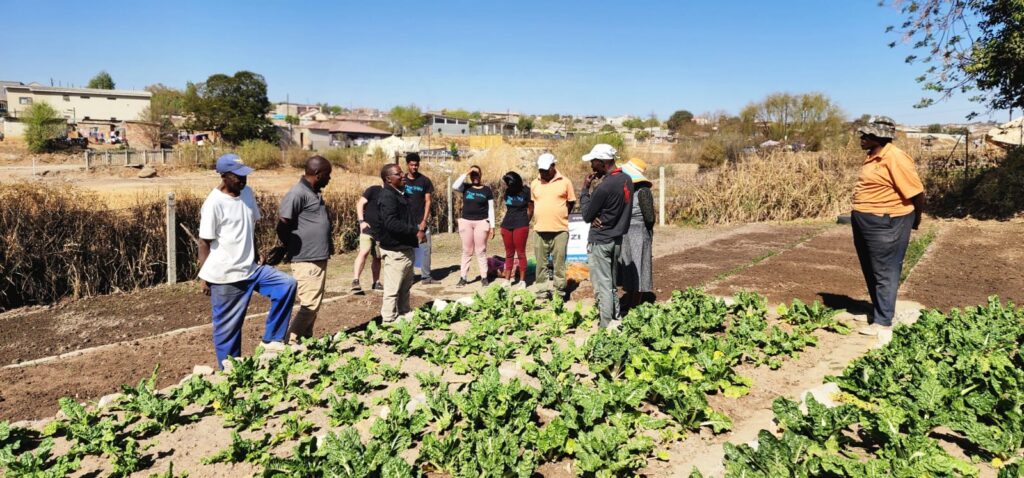
Skills Development for youth

3. Supporting Economic Growth

A nation’s ability to compete on a global stage depends significantly on the skills of its workforce. Skills development not only drives business growth, but also contributes to reducing unemployment, poverty, and inequality. It empowers people to access better job opportunities and improve their quality of life.

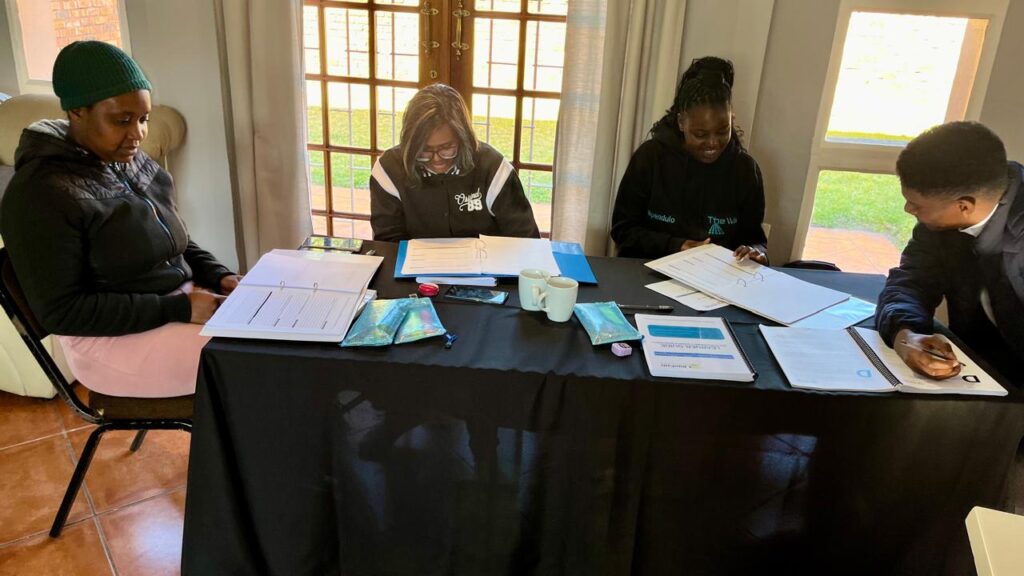
Continuous learning and skills development more critical than ever.

4. Encouraging Lifelong Learning

In a world that never stops evolving, the concept of learning should not be limited to formal education. Skills development promotes a culture of lifelong learning, where individuals take ownership of their personal and professional growth throughout their careers.

5. Bridging the Skills Gap

Many industries face a growing skills gap, where the skills that employers need don’t match what workers can offer. Addressing this gap through targeted training and development ensures that both individuals and organizations can meet future challenges with confidence.

6. Fostering Innovation and Agility

Organizations that encourage learning and development are better positioned to innovate and adapt. Employees who are continuously developing their skills tend to think more creatively, solve problems more effectively, and embrace change more easily.

Umsizi and Skills Development

At Umsizi, we believe in the vast potential of individuals and communities across South Africa. Our mission is to empower organisations, individuals, and communities to achieve broad-based development through measurable social and economic solutions. Since its founding in 2006, Umsizi has developed an extensive portfolio of socio-economic development solutions, empowering tens of thousands of households across South Africa. Our programmes have been implemented in all nine South African provinces, with experience extending to other African countries.

We are in the business of upliftment, skills development, and sustainable solutions at a grassroots level. Our holistic Socio-Economic Development (SED) and Local Economic Development (LED) programmes offer a sustainable foundation for harnessing this potential and enabling individuals to succeed. We take an inclusive approach that addresses economic, social, and environmental dimensions of development, and we help foster meaningful and lasting transformation within these communities.

Umsizi delivers solutions that directly drive the growth of productive economic activity, boost profitability, support enterprise expansion, and strengthen livelihood resilience. Our range of productive infrastructure services includes sustainable access to water and energy, as well as initiatives for agricultural and local economic development.

In addition to our external initiatives, we are deeply committed to investing in our internal team. We continuously support our employees through ongoing training and skills development programmes aimed at enhancing their capabilities and expanding their professional skillsets.

We further demonstrate our commitment through both financial and relational investments by awarding bursaries and facilitating learnership opportunities for underprivileged learners. Over the past three years, Umsizi has journeyed alongside seven learners from a local high school, providing both financial support for school fees, and meaningful exposure to various aspects of our organisation and our NPO Impophomo Rushing Waters. These students have participated in Umsizi-facilitated training sessions and engaged in experiential learning through involvement in several of our NPO-led projects.

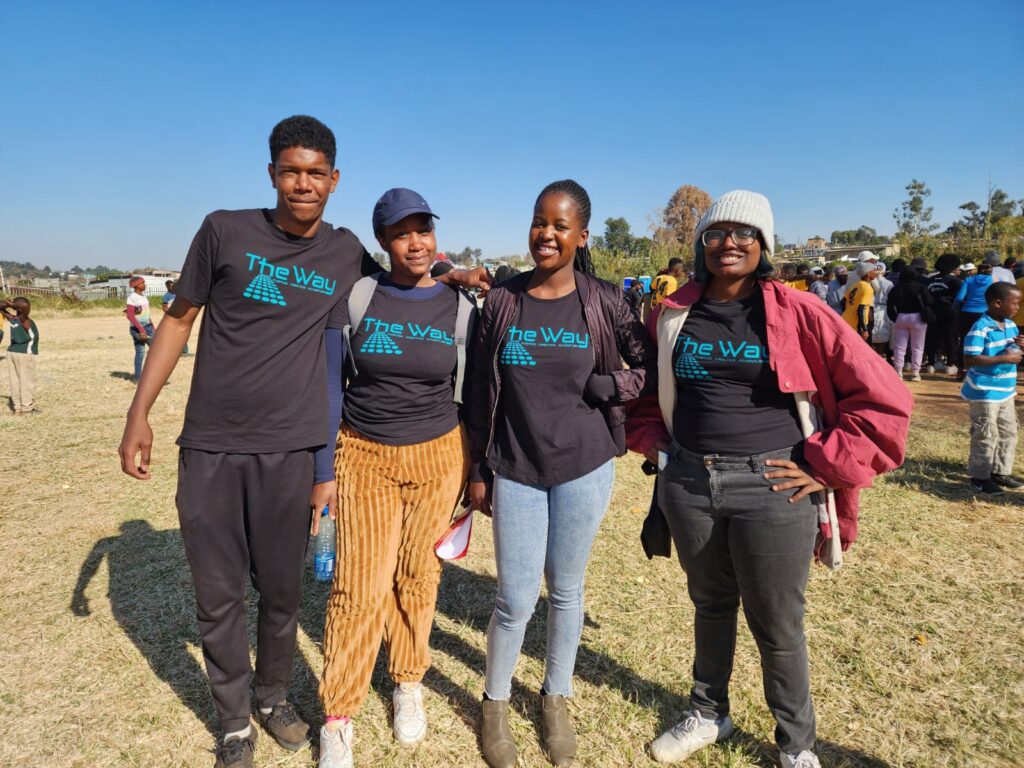
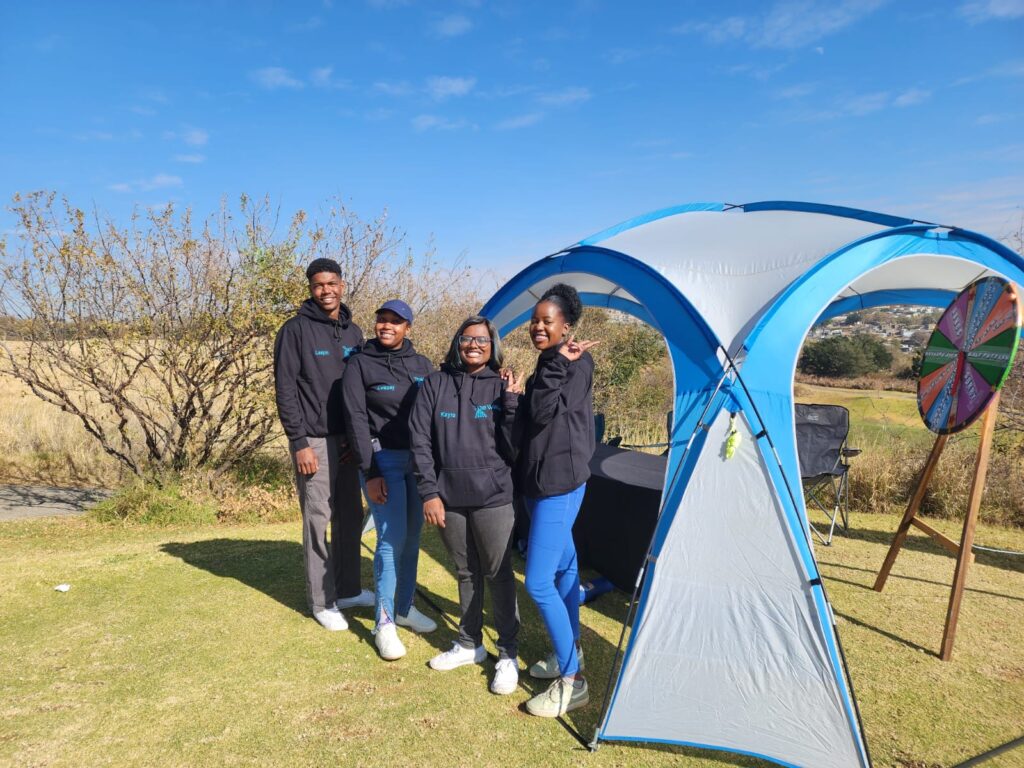
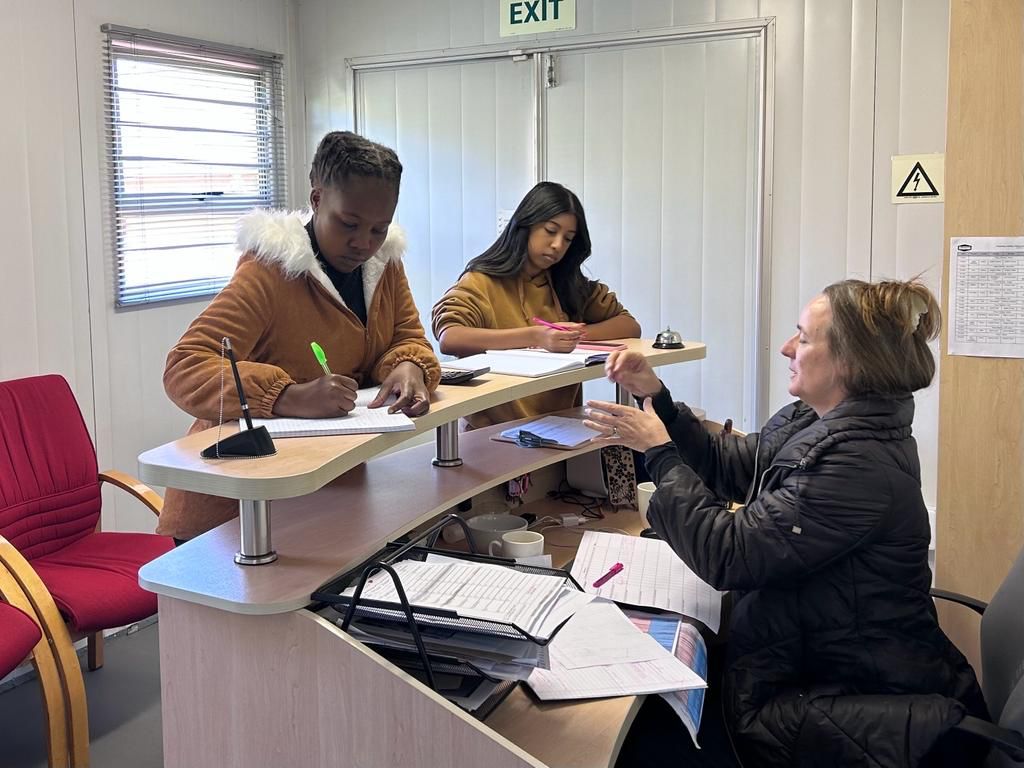
Umsizi is proud to have assisted three additional learners to successfully graduate from The Way Learnership Programme, an initiative designed to equip young adults with the skills, knowledge, and opportunities needed to build purposeful and sustainable futures. This programme extends beyond traditional learnership models, striving to deliver transformative impact in the lives of its participants. The skills development achieved through this learnership include Business Administration (NQF Level 4 Business Administration Certificate); Career Planning; Project Planning and Collaboration; IT and Computer Literacy; Life Skills Development; Healthy Living; Community Engagement and Professional Mentorship and Job Shadowing.

Final Thoughts

Skills development is more than just training—it’s about building a mindset of growth, adaptability, and resilience. Whether you’re learning a new digital tool, mastering leadership techniques, or improving communication skills, every step you take strengthens your value and potential.

In a fast-moving world, standing still is not an option. The commitment to learning and developing new skills is what will keep you—and your organization—ahead of the curve.

]]>
ICT Social and Labour Plan (SLP) conference https://www.umsizi.co.za/ict-social-and-labour-plan-slp-conference/ Sun, 25 Aug 2024 04:49:48 +0000 https://www.umsizi.co.za/?p=2535

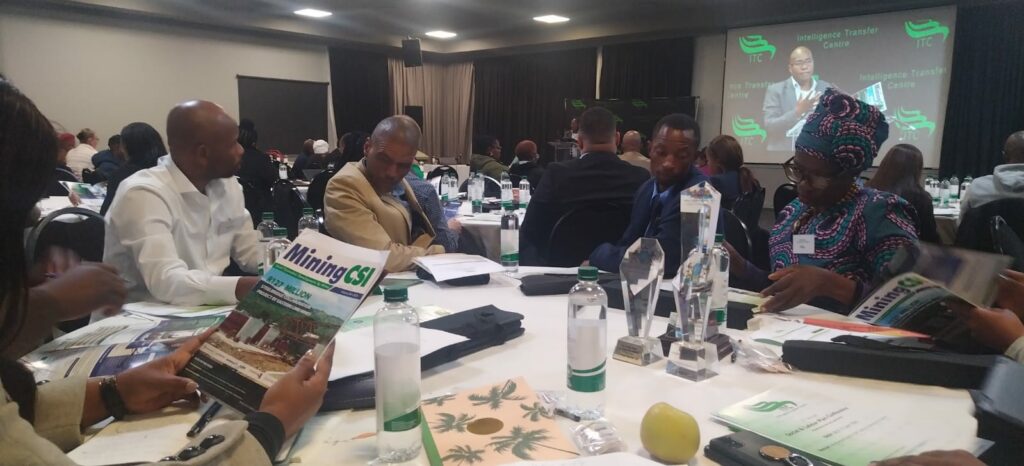
Another year has passed for the ICT Social and Labour Plan (SLP) conference, and the question remains: Are these platforms truly adding value to the lives of SLP practitioners? At this conference, practitioners from various operations across the country come together to share experiences, best practices, and strategies for managing the complex challenges they face daily.

The reality is that many participants are overwhelmed with responsibilities. Even when they do engage, they must still attend to the demands of their operations. This raises several questions: Is the function itself under-resourced? Are practitioners struggling to delegate responsibilities while they are away? Or is it that communities insist on dealing with one specific person, making it difficult to share the workload? The pressures on these practitioners are significant. If communities decide to block the mines and halt production, the consequences could be severe. As a result, many practitioners are constantly on edge, leaving them with little time to fully engage with and utilize platforms like this conference to explore ways to improve their work environment and service delivery.

In spite of these challenges, the conference remains crucial and necessary. It enables practitioners to learn from one another, share their experiences and best practices, and more importantly, it creates opportunities for collaboration and partnership beyond the mining industry. The Umsizi Sustainable Social Solutions (Umsizi) team was among the presenters, sharing their experiences, lessons learned, and best practices that support mines and communities in their journey toward achieving and maintaining a social license to operate. Their efforts also help ordinary community members achieve financial breakthroughs. During panel discussions, the Umsizi team addressed several key topics:

ICT Social and Labour Plan conference 1

Stakeholder Alignment Complexities

Challenges in stakeholder engagement are growing, with some interactions even becoming toxic. Practitioners have faced threats, verbal abuse, and in isolated cases, physical assault. Government officials, rather than working collaboratively, often create additional obstacles, constantly shifting the goalposts. SLP practitioners have opportunities to learn from each other about strategies and tactics to build mutually beneficial relationships, not just with local communities but also with government and other stakeholders. The focus should be on what unites us as a society, not what divides us. A “them and us” mentality does not build thriving communities, but incorporating structures from different sectors of society and working together towards the common goals of confronting poverty, inequality, and joblessness can.

SLP During Mine Closure

De Beers Voorspoed shared insights from their mine closure journey, emphasizing the importance of structuring SLPs with closure in mind from the outset. Transparency about the life of a mine is crucial. While a mine’s opening brings hope and vitality to an area, its closure is inevitable, and it is essential to empower communities to be self-sufficient rather than dependent.

Sustainability Beyond SLP

It is evident that many mines are adopting a “beyond compliance” approach, aligning with international standards such as IFC and ICMM, and increasingly focusing on ESG (Environmental, Social, and Governance) strategies. To a certain degree, mines are investing even more in other social initiatives alongside the SLP to achieve their ESG strategies. However, questions arise about the alignment between the DMRE and these global standards. Is the industry advancing ahead of regulators and the communities they operate in? There is a need for more engagement among industry, government, and communities to align and move forward together, reducing ongoing conflicts. Some guidelines clash with community traditions and cultural norms, leading to misunderstandings and conflict. For example, paying “Malotsho” (a fee for visiting the Traditional House) is a long-standing tradition seen as respectful by the community but often misunderstood by the industry as bribery. Unless a common understanding is reached, conflicts will continue to arise within these blurred lines.

Partnerships and Collaborations

ICT Social and Labour Plan conference 5

South Africa’s challenges are well-known: poverty, lack of services, and deteriorating infrastructure are visible everywhere, especially in communities around the mines. It is unfair to expect one party to solve these issues alone. If ever there was a time to work together, it is now. We must unite to pull ourselves out of the hole we are slowly sinking into. The Steelpoort steel bridge was highlighted as an example of successful collaboration, and participants agreed that we must move beyond the mining industry acting alone. OMEs and other industries, such as retail, manufacturing, and banking, should be involved in building thriving communities.

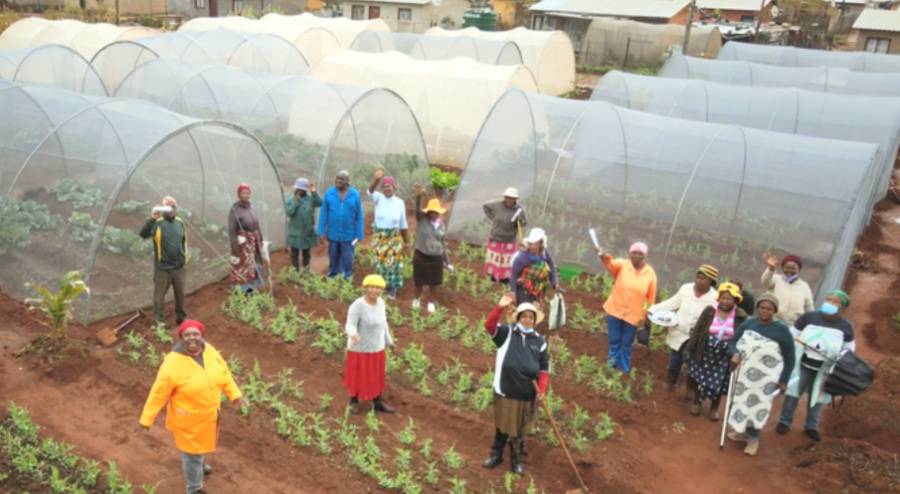
This year, the Umsizi team brought a unique element to the conference by including a virtual site visit. Through video and drone footage, conference attendees were able to “visit” a handful of the thousands of participants in the Umsizi Livelihoods programme. Additionally, Umsizi arranged for four top-performing participants to share their journeys and success stories at the conference. These beneficiaries confirmed that their lives had been transformed by the Umsizi Livelihoods programme, which Umsizi delivers on behalf of Harmony, DRD Gold, Taung Gold, and other clients. They are now teaching others to grow their own food and start small businesses.

One young woman from the Harmony programme is now teaching primary school students to create their own food gardens and feed their families. She emphasised that it’s not always about one big farm, but about empowering thousands of households and schools to become independent and no longer rely on grants. This raised a key question for participants: How did you get young people from Ekasi to fall in love with farming?

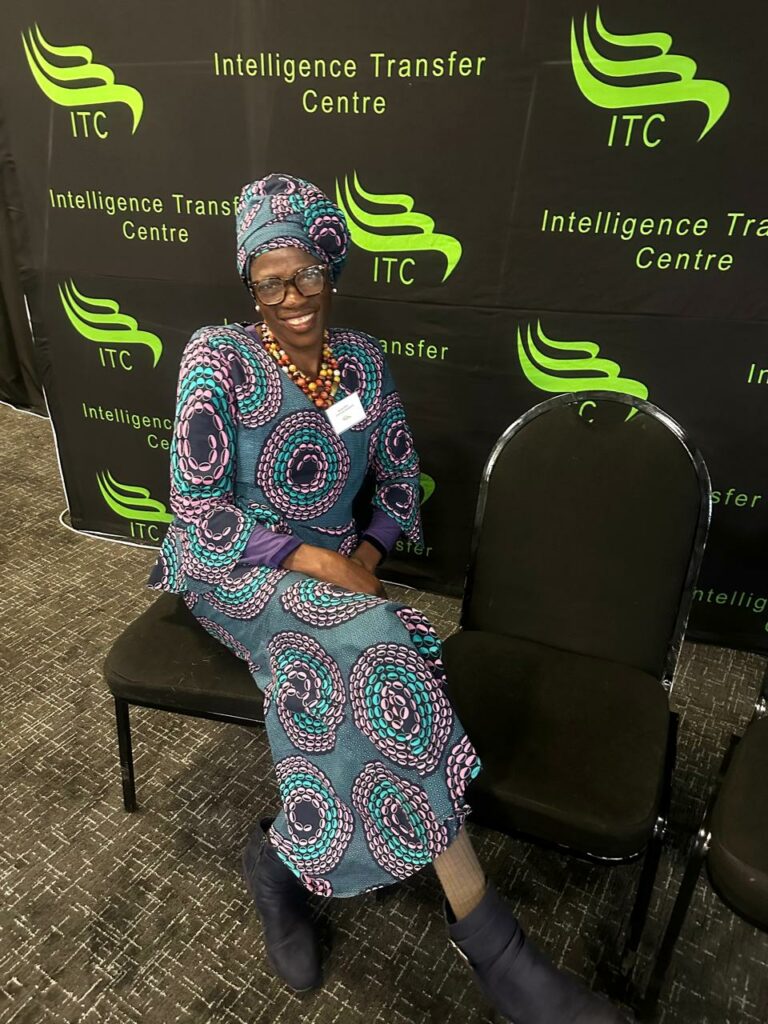
Meet some of our top performers who attended the conference:

  1. Francina-Mary Ntlebi from Kokosi
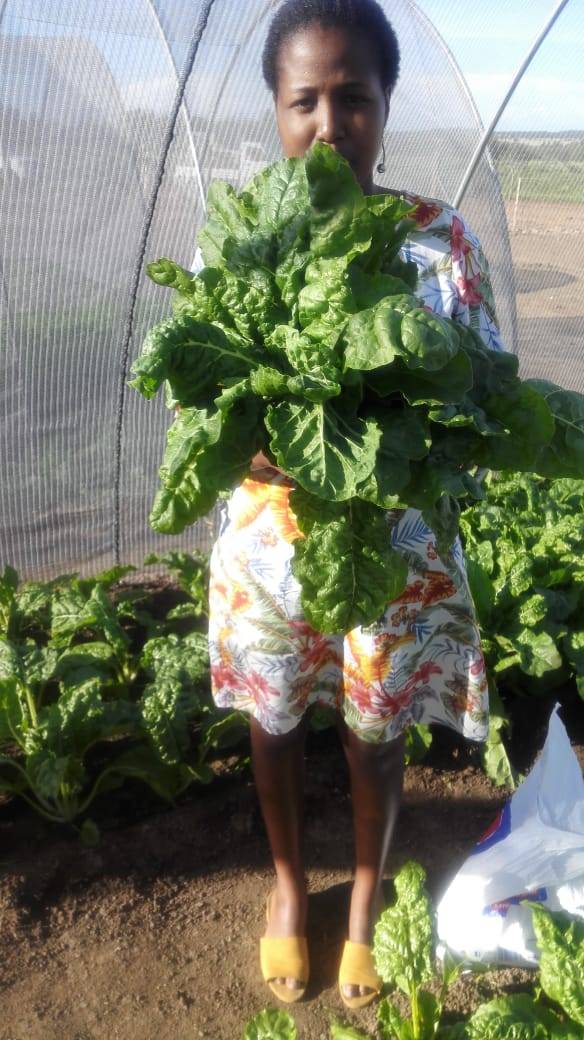
    Francina-Mary’s mother initially farmed using traditional methods in their backyard. She encouraged the initially reluctant Francina-Mary to join the Livelihoods Programme. As a young person, she was hesitant at first, but she took to it, implementing modern farming techniques and qualifying for a greenhouse tunnel. They then expanded their efforts, and production improved significantly. She now leads youth in Kokosi, encouraging them to participate in the programme and to farm. “I don’t remember when we last bought vegetables at home,” she said gratefully. The family now sells surplus vegetables for extra income and is expanding their operations into a full-fledged farm business. Francina-Mary has identified a market gap for herbs and plans to grow them so she can start her own range of organic beaty products.
  2. Thabo Molale
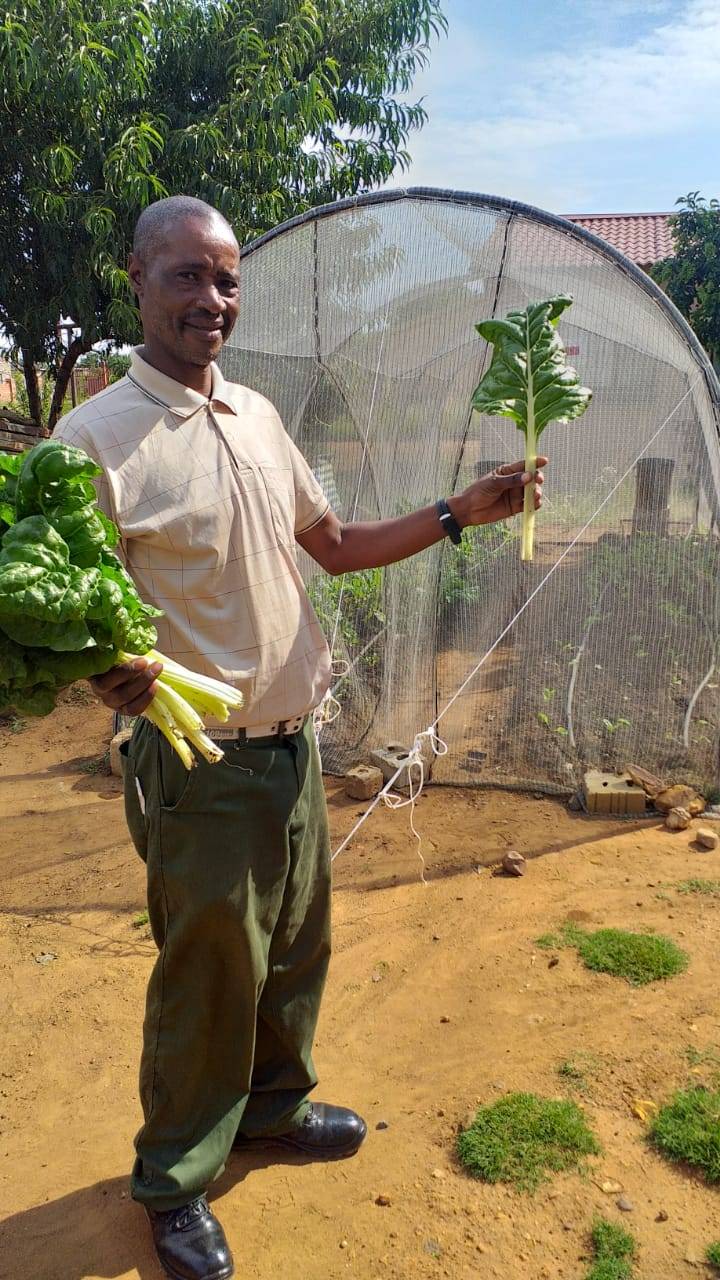
    Contrary to the belief that young people don’t want to farm, Thabo, a youth from Khutsong community in Merafong, has proven otherwise. After joining the Umsizi Livelihoods Programme, Thabo mastered organic farming principles, leading to abundant production. His success attracted support from organisations like Harmony, which built him a commercial greenhouse tunnel and provided water infrastructure. Thabo’s achievements have inspired many young people in the Merafong communities, and he continues to grow his commercial farming business.
  3. Martha Mnisi from Merafong, Khutsong Ext 5
    Martha has maximised every inch of her yard for farming. She joined the Umsizi Livelihoods Programme in 2018 and has taken full advantage of the training opportunities offered, including Horticulture, Basic Business, and Expansion Agriculture training. She secured land from the municipality for expansion, and is now part of the Umsizi Expansion Agriculture programme, which focuses on scaling up operations. Martha has her own client base and packages and delivers her vegetables to her clients and within her community. Martha is committed to sharing her skills with others in her community, and has trained thousands. Her dedication has earned her several awards.
  4. Max Nkwana from Soweto
    Already farming when the Umsizi Livelihoods Programme was introduced in Soweto, Max benefited greatly from the Basic Business programme, particularly in record keeping. This skill proved crucial when he won a major aquaponics project in Soweto, where meticulous record keeping set him apart from competitors.

In conclusion, SLP practitioners continue to seek strategies and approaches to build mutually beneficial relationships with communities and governments. The ultimate goal for everyone is to identify, co-create, and implement social solutions that bring greater impact for the benefit of all.

]]>
Broad-Based Livelihoods (BBL) Program in Merafong Empowers Thousands, Celebrated by Industry Leaders https://www.umsizi.co.za/broad-based-livelihoods-bbl-program-in-merafong-empowers-thousands-celebrated-by-industry-leaders/ Fri, 28 Apr 2023 04:56:12 +0000 https://www.umsizi.co.za/?p=2354 In a world where mining is often synonymous with environmental degradation and social upheaval, one company is rewriting the script. DRDGOLD, a South African gold mining company, has not only transitioned completely from deep level underground mining to large- scale retreatment of mine dumps and tailings dams, but they’re doing it profitably and sustainably. This innovative approach not only restores the environment and frees up previously sterilised land, but also enhances the quality of life for those living in close proximity to their installations. And now, with a promising partnership with Sibanye-Stillwater, DRDGOLD is poised to expand into other minerals, such as PGMs, and continue unlocking value in their non-core surface assets. DRDGOLD is a shining example of how responsible mining practices can benefit everyone involved.

As a responsible corporate citizen, DRDGOLD’s commitment to sustainable development extends beyond its core business operations. Through their FWGR SLP, they have successfully implemented a Livelihoods programme, empowering thousands of willing participants in the communities around their operations.

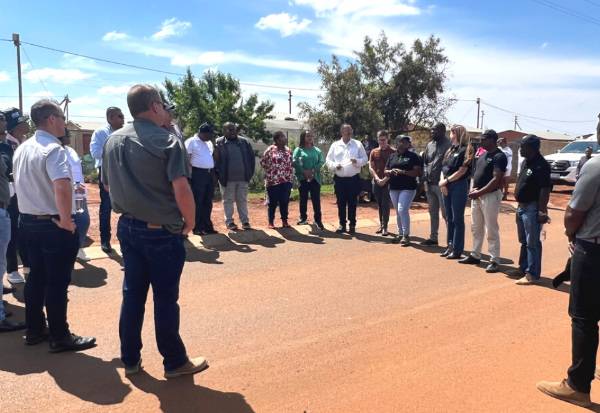
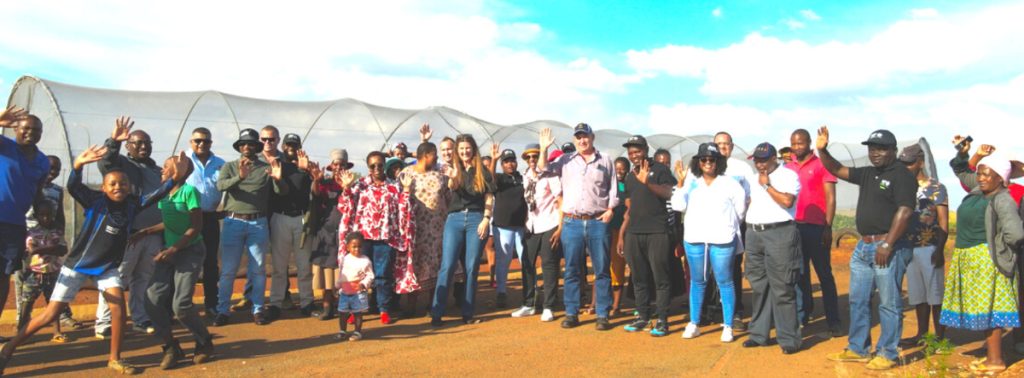
Site visit at BBL households in Khutsong

However, DRDGOLD’s impact has been even greater through their collaborative partnerships with industry leaders like Sibanye-Stillwater and the World Gold Council, further strengthening their efforts towards sustainable development.

The Broad-Based Livelihoods (BBL) programme in Merafong, a region in the North West Province of South Africa, has been a resounding success, and its impact was celebrated by representatives of DRDGold, Sibanye-Stillwater, the World Gold Council, the Minerals Council, and other partners and stakeholders. The event was organized to acknowledge the BBL’s impact in empowering Merafong residents through horticultural and business skills.

The BBL programme was designed and initiated in 2018 by Umsizi Sustainable Social Solutions and SocioTech, with DRDGold as the main sponsor. Since then, the programme has empowered hundreds, if not thousands, of residents to become economically productive and alleviate poverty in their local context.

The positive results of the BBL programme attracted the attention of Sibanye-Stillwater, which subsequently brought the World Gold Council on board. The Council contributed additional funding to expand the BBL in the area through the provision of 40 productive horticultural tunnel infrastructures.

Community: DRDGold, Sibnaye, World Gold Council,Minerals councils, Umsizi, Socio Tech and Facilitators

Thabisile Phumo of Sibanye-Stillwater discussed future plans for a food revolution that will require sponsorship and investment to roll out one million food gardens across Southern Africa, highlighting the potential of the BBL for socio-economic development.

Overall, the collaboration between FWGR (DRDGOLD Far West Gold Recoveries), Sibanye-Stillwater, the World Gold Council, Umsizi, and SocioTech has been a wonderful success in empowering Merafong residents through the BBL programme. Those interested in learning more about the BBL programme or getting involved can visit umsizi.co.za

]]>
SLP Compliance: Understanding the implications of mine closures on mining communities https://www.umsizi.co.za/slp-compliance-implications-of-mine-closures-on-mining-communities/ Thu, 29 Dec 2022 06:35:44 +0000 https://www.umsizi.co.za/?p=2315 In order to mine anywhere in South Africa, on any scale, a company must submit a Social and Labour Plan (SLP) to the Department of Mineral Resources and Energy (DMRE) if they wish to be granted and maintain a mining right. SLPs are a component in the government’s aim to ensure that the mining sector is equitable, reversing the legacy of historic inequality in the mining sector. Attaining and then adhering to SLP compliance will mean a better future for many thousands of currently vulnerable South Africans.


Why are SLPs and SLP compliance necessary?

It becomes very apparent how important SLP compliance is when considering the nature of the impact that mining operations have on the communities in which they operate. Throughout history and all over the world, mining towns have been established where there was no prior human settlement due to a mine’s operations. This is no less true in South Africa. When a mine closes, this results in a direct loss of jobs for mineworkers and opportunities for the broader community for those living in a mining town. When a mine begins operating in an established community, that community often becomes dependent on the mine’s operations for their continuing socioeconomic growth and development. When SLP compliance is in place and followed, intentional actions are undertaken to ensure the long-term viability and sustainability of communities impacted by mining.

Not only are those employed directly by the mine at risk when a mine closes, but many secondary industries that develop in a mining town are also very vulnerable to any changes to the mine’s productivity. Examples of such secondary employment include any jobs relating to supply chains, or the employment offered by services that would be built specifically to cater for the needs of those employed directly by the mine. If the mine should close, those working in these service industries are also likely to see their own jobs cease to exist as well.

SLP compliance seeks to ensure that gainful employment is still available to mine affected communities, even beyond the life cycle of the mine. Through upskilling and livelihoods development programmes, a vibrant secondary economy can be established which long outlasts the life of mine.


SLP compliance and historic inequality in the industry

It is a sad reality, but there are all too many historical examples of mines, or the industry as a whole, not adhering to the high standards of safety and employee health that is expected today. Poor living and working conditions were often the norm, and unsafe working conditions were often to be expected. SLP compliance also aims to ensure that these mistakes are not repeated, but that the safety and dignity of mine workers is guarded, thus ensuring the best possible quality of employment for mine workers into the future.

There is also a strong drive to ensure employment equity and transformation in mining. The government is specifically focused on ensuring that historically disadvantaged persons (black, Indian, and coloured South Africans) as well as women are increasingly represented at higher management levels of the mining industry.


SLP compliance is a legal obligation throughout the lifetime of operations

Once an SLP is submitted and approved, and the mining rights are awarded, the SLP becomes a legally binding document. To maintain the mineral rights, the objective laid out by the SLP must be implemented. SLPs must also be reviewed and resubmitted every 5 years, for the duration of the life of mine. When done properly, SLP implementation will lead to the communities surrounding the mining operation being empowered, and tangible socio-economic benefits will be seen by community members and other beneficiary stakeholders. Effective implementation of all the elements of the SLP is paramount in realising the original aims of the legislation.


What does SLP compliance aim to do?

SLPs aim to see that petroleum and mineral resources are developed, and economic growth is promoted in South Africa. This growth and development cannot be at the expense of workers or communities in which the mining operations function.

To this end, SLPs fall within the general aim to advance the welfare of all South Africans, economically and socially. SLP compliance thus ensures that those holding the rights to mine make lasting contributions to the economic and social development of the areas in which they function, as well as the regions from which most of their workforce are sourced and originate from (also known as Labour Sending Areas).

Where SLP compliance is attained and adhered to, it will have lasting benefits on the communities that rely on the mining concern, even if the mining operation downscales during its operational lifetime, and even after the project comes to a close.


Adding real value to communities

When SLP compliance is earned and implemented, it will produce real benefits to the communities it aims to develop and uplift. These can be seen in the upgrading of infrastructure in the area of operation. Improving schools, buildings and roads would mean benefits to the community for years after the operations have come to close. Providing water, housing and sanitation in the region is another way that SLP compliance is applied in practical terms for the community members to also benefit from the mining operations.

Other aspects that SLP compliance can address is training of community members in various career paths, and programmes that equip the people with other useful skills, such as being taught to cultivate their own food as well as other trades, like plumbing, electrical skills, or carpentry work.

Lastly, the SLP aims to eradicate poverty and support community members to enter into meaningful socioeconomic activity which is not dependent on the mining industry. Various interventions, like livelihood development projects, can be implemented in mine host communities to further establish socioeconomic development.


SLP compliance benefits the community even after the mine no longer operates

SLP compliance is expected beyond the lifetime of a mine, since its responsibilities as outlined in the SLP do not terminate when the mine closes. Not only is the aim to see the above types of community benefits tangibly produced by the end of the mine’s life cycle, but the land where the mining has taken place must be rehabilitated so that it can be utilised for agricultural purposes by the communities that remain after the mine closes. All SLPs stipulate that funds need to be put aside throughout the lifetime of the mining project to deal with the future closure of the mine. SLP compliance ensures that these measures are implemented.

There must also be a clear five-year closure process in place in order to ensure that the negative socio-economic effects of closure are mitigated. SLP compliance will see to it that the rehabilitation of the area is enforced, and that the mine’s workers have been both upskilled (through Human Resources Development programmes) and retrained (through Portable Skills programmes), so that they can find employment once the mine has ceased its operations.


One of the biggest challenges

One of the largest obstacles to effective SLP compliance is when an SLP is developed that is not relevant to the community that it seeks to serve. It is not uncommon for employees and residents to feel overlooked when an SLP is being developed, leading to resentment and real or perceived feelings of not truly benefitting from the programmes that are being implemented. Even if there is a high rate of true SLP compliance, these can be the real outcomes for the people on the ground.

This is why genuine stakeholder engagement is so vital in the design and implementation of an SLP. Mining right holders are required, by law, to conduct processes of broad-based stakeholder engagement when developing a new SLP. Stakeholders that should be consulted include municipalities, traditional authorities, community leaders, as well as the broader community themselves. Organised labour should also be consulted through the Future Forum or SLP Forum structures. For more information about stakeholder engagement, as well as how Umsizi can assist with your stakeholder engagement needs, read this article.


SLP Compliance is attainable

Taking all this into account can be daunting, but SLP compliance does not have to be an insurmountable obstacle. Umsizi has successfully developed over 400 Social and Labour Plans for various clients, including multinational mining companies as well as smaller mining right holders. We have helped each of these companies attain SLP compliance, guiding them to secure the necessary rights to conduct their businesses and ensuring that their impact on their host communities is tangibly felt and reduces social risks to the operation.

Umsizi’s expert stakeholder engagement approach ensures that everyone involved in SLP compliance truly benefit from mining activities, in real and tangible ways, in each individual context that every SLP is targeting.

This is the goal of SLP compliance: ensuring that companies profit not just themselves, but also the communities and all the stakeholders involved as they operate in South Africa. SLP compliance is a positive and necessary step towards that end, and Umsizi can partner with you and your business to ensure that SLP compliance means the mining activities you undertake will uplift your host communities in the long term.

Contact us today so that we can begin the process of securing SLP compliance. To see some of the successful sustainable socio-economic solutions that we have implemented, click on this link here.


Bibliography/Further Reading:

https://www.dmr.gov.za/Portals/0/social%20and%20labour%20plan_guideline.pdf

https://www.wits.ac.za/cals/our-programmes/environmental-justice/social-and-labour-plans/

https://www.wits.ac.za/media/wits-university/faculties-and-schools/commerce-law-and-management/research-entities/cals/documents/programmes/environment/resources/SLP%20Community%20Toolkit%202%20March%202017.pdf

https://www.google.com/url?sa=t&rct=j&q=&esrc=s&source=web&cd=&cad=rja&uact=8&ved=2ahUKEwiS37v5jNH3AhUoS_EDHQXZC38QFnoECB0QAQ&url=https%3A%2F%2Fwww.mineralscouncil.org.za%2Fcomponent%2Fjdownloads%2Fsend%2F32-workshops%2F492-innovative-ways-of-thinking-in-the-slp-space&usg=AOvVaw168wdMGH4uE56nQ8YcknWa

https://www.goldfields-southdeep.co.za/our-communities/social-and-labour-plans

https://www.bizcommunity.com/Article/196/608/184255.html

https://www.encyclopedia.com/history/dictionaries-thesauruses-pictures-and-press-releases/mining-towns

https://journals.co.za/doi/abs/10.10520/ejc-vp_stock_v11_n10_a6


]]>
UMSIZI set out to proactively pursue an improved BBBEE Score https://www.umsizi.co.za/umsizi-set-out-to-proactively-pursue-an-improved-bbbee-score/ Fri, 23 Jul 2021 12:41:44 +0000 https://www.umsizi.co.za/?p=2082

In 2020, UMSIZI set out to proactively pursue an improved BBBEE Score

In order to improve our previous BBBEE score of Level 5, Umsizi implemented a strong transformation strategy to set us up for long term, ongoing BBBEE compliance.

Despite legislated requirements, we at Umsizi believe that transformation is an essential key to developing our country and the services we offer to communities and businesses attest to that. The very nature of the work that Umsizi does as a business demonstrates the high value we place on transformation and empowerment. It is not merely a matter of compliance for us, but in fact, fundamental to who we are and central to our organisational mission.

The aim of our transformation strategy is providing real opportunities for Historically Disadvantaged Persons to become financially independent and developed to meet their full potential.

We are against any form of fronting and therefore take the additional time and effort required to ensure real transformation activities that will yield sustainable and long-term results.

Umsizi put in place a BBBEE Improvement Plan with the goal of achieving a level 3 score by March 2021.

Some of the key measures to increase our score include:

  • Increasing our spend on Skills Development through the implementation of an Umsizi Learnership and an Internship Programme with Historically Disadvantaged Persons, especially black women and youth.
  • Empowering a 100% black owned emerging company to provide high quality socio-economic development services, based on a proven track record established with Umsizi in this field. This includes mentorship, economic participation and exposure of Ikamva by Umsizi in our Company’s mission in South Africa
  • Increasing our spend on Procurement from majority black owned suppliers.
  • Increasing our Enterprise and Supplier development spend on black owned enterprises, with a focus on women and youth.
  • Appointing a non-executive black female director to Umsizi’s board.

Umsizi is a proud level 2 BBBEE contributor

These measures are in addition to the welfare work that we do through our NPO Impophomo Rushing Waters, and our flagship Broad-Based Livelihoods programme.

We are delighted to report that after implementing the measures above, and in line with our philosophy of not merely complying, but actively seeking to make a tangible difference, we have exceeded our objective by achieving a BBBEE Level 2 score!

This triumphant result is a culmination of hard work, determination, belief in the power of transformation, and our commitment to our clients and the community. Our 16-year track record reflects that empowerment is the heart and soul of Umsizi, and this achievement was made possible because of the authentic emphasis we place on transformation.

]]>
An important message to all clients and stakeholders in astonishing times https://www.umsizi.co.za/an-important-message-to-all-clients-and-stakeholders-in-astonishing-times/ Tue, 31 Mar 2020 11:48:04 +0000 https://www.umsizi.co.za/?p=1901

Umsizi voices our solidarity and unity with all people in South Africa in this time of the nationwide lockdown to prevent the spread of COVID-19 and its terrible effects on our nation. We earnestly pray to God for His swift intervention, protection and recovery in all spheres of health, society and economy, and especially for those people who are vulnerable. Umsizi is overwhelmingly thankful to our President and government for their decisive leadership and to all essential services workers who are in the front lines of fighting the battle against Covid-19 and serving our nation, not looking to their own interests, but to serving the interests of others. We join with all of our clients, stakeholders, communities, partner networks and friends, in remaining hopeful and confident that we are stronger together, and that this too will pass. However, we acknowledge with wisdom that each of us must honour our responsibility to maintain social distancing, good hygiene and observation of the lockdown.

Umsizi remains fully active in providing consulting and development implementation services to our partners and communities, via remote means from our homes. Although we have been forced to suspend fieldwork and physical contact on the ground, we are continuing to encourage our stakeholders and vulnerable communities throughout this time via all available channels. In these last two weeks we have been able to reach many who participate in our client projects and development programmes. The current unprecedented circumstances do not hamper our ability to continue our commitments towards our partners or compromise our work with beneficiaries and partners. Our Broad-Based Livelihood Development Programmes (BBLs) can continue unabated in this time.

The core strategy of our BBLs, and all skills and knowledge which have been transferred to target communities through these, are especially relevant now: Households have been empowered and are able to sustain themselves and others through this difficult time, through the production of healthy food, boosting their immune systems and promoting the overall health of families. Through our on-going remote support, beneficiaries are using this time in the lockdown as an opportunity to expand their productive efforts from the home. Through their own food production, they are able to avoid congested supermarkets and public transport, thereby preventing the spread of the virus, and save money. Many are giving freely and selling to their neighbours who are struggling or who need good vegetables and fruit. Monitoring, feedback and support between our teams, clients, stakeholders and the beneficiaries will continue throughout the lockdown.

Umsizi is also giving urgent attention to the coordination of a widespread relief and humanitarian effort for the weeks to come, through our very own Non-Profit Organisation “Impophomo Rushing Waters” (www.impophomo.org.za). During the lockdown and in the weeks to follow, the socio-economic needs of households and communities will significantly increase. Thousands stand to lose their livelihoods and will be desperate for help and welfare, as the adverse impacts of Covid-19 take grip. Updates on our relief programme will be available on the website of Impophomo.

We continue to pray for good health and the physical and spiritual well-being of ourselves and all our partners. Thank you for continuing to stand with us, both in responsibly fighting the spread of the Coronavirus, and in promoting the socio-economic development partnerships which are so essential – and all the more so in this time.

God bless you
John-Mark Kilian
CEO of Umsizi Sustainable Social Solutions

]]>
Uplifting Communities in the Free State https://www.umsizi.co.za/uplifting-communities-in-the-free-state/ Fri, 14 Sep 2018 08:01:04 +0000 https://www.umsizi.co.za/?p=1812 On 7 September 2018, John Mark Kilian of Umsizi gave feedback on the Broad-Based Livelihoods Program which Umsizi has been implementing together with Taung Gold in Nyakallong and Kutlwanong in the Free State. He addressed the director, the office of the mayor, dignitaries, ward councillors, community stakeholders, the DMR’s regional manager and staff, and all others present at the event. John Mark had this to say:

Today is about celebrating and recognizing those of you who embraced the Broad Based Livelihoods Program and I would like to thank everybody for making time to be here today. We are here today to recognise a journey which began back in 2015, a journey which has touched the lives of over three hundred households in Nyakallong and Kutlwanong, a journey which Taung Gold is very proud to be involved in. Almost one thousand people have gained additional life-skills from the program, empowering them to advance their well-being. Our intention with BBL was to enable you to make a difference for yourselves, to reduce dependency on others and to set you on a path to being economically self-sufficient and sustainable. I am truly impressed by the energy and determination shown by you and I encourage you to continue with this energy and determination to further succeed. We will continue to assist where we can.

Broad-based strategiesIn the next few years, Taung Gold intends to develop a new project, the Jeanette Gold Mine, just to the East of where we are standing. Our journey, like yours over the past three years, is one that requires creativity and innovation to advance the Jeanette project since we acquired it from Harmony. Right up front we recognized that our local communities are very important to the success of the project and it is for this reason that we decided to initiate the Broad-Based Livelihoods Program. By necessity, creativity required us to engage with you and harness your energy and resourcefulness to create a high level of determination from all stakeholders and establish a successful partnership. 
Of course, there must be a foundation on which success can be built and, in our case, the very earth on which we are standing provided such foundation: Firstly, this earth contains one of the very reasons why Taung Gold exists; a deposit of gold which lies deep beneath our feet. Secondly, this earth also provides the opportunity for the Broad-Based Livelihoods Program, started by Taung Gold with its partners, as a sign of our commitment to sound relationships, whilst we explore, design, finance and build a new gold mine.

Of course, the willingness of the community to accept us and work with us has been critical to the success of the program and I really do want to thank everyone for that spirit of cooperation and support, without which we would not be here today. 

Enterprise Development ProgrammesAll great journeys begin with small steps and our starting point for the BBL program was to focus on growing food, a basic need that we all have. As we saw the commitment of the participants in the program this then progressed to education and assistance with small business principles. The program has been open to all interested people from the local communities so that as many people as possible could participate. Of course, we welcome more participation moving forward. This education and training imparts practical knowledge and business skills into the minds and souls of those who chose to “give it a go” and the results are clear for all to see. All of the participants in the program have demonstrated energy and determination to succeed and many of you have been able to establish sustainable small enterprises which are able to put food on the table.
Let me share with you some of the achievements of the Broad Based Livelihoods Program:

  • Over 800 people have attended the garden training workshops and these have, in most cases, put food on the table with lots of people now eating better than before;
  • Our records show that 85 households have been earning money by selling vegetables;
  • Almost 100 families have built their own vegetable tunnels and some have progressed to successful businesses in vegetable farming;
  • The vegetable tunnels can be seen on almost all streets in the local community. 

These achievements and the fact that there are vegetable tunnels on most streets make it obvious that the partnership between us is working and we should be proud of that. 

We are very excited about the fact that we have been able to assist you to make a difference to your own lives and to also impact positively on the lives of others in your communities. I believe that what you have been able to achieve sets a very good example for others to aspire to. You truly have set a wonderful example and I believe that you are a remarkable inspiration to society. 

I challenge you to dream of really growing your businesses, expanding your abilities further afield and developing your efforts into significant enterprises. Having taken the small and often most difficult steps to get going, I urge you think about expanding your horizons and dream big. 
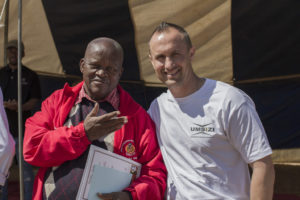
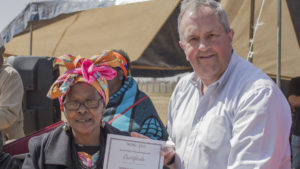
A little later we will be recognizing local business owners who have completed the learning workshops on Business Tools for Profitability and they will each be receiving certificates of recognition. This training has enabled them to be able to look at their businesses and identify areas for improvement and to reduce costs, increasing profitability. Some of these people have even started to train their neighbours and help them to get going as well. That really is special and deserving of recognition. 

Just take a moment and think about your successes. Think about your dreams and aspirations and how to make them happen.

Many of these businesses are staring to get together and are creating their own Business Chamber to represent them and this will make them and the community much stronger. Unity will enable you to develop a stronger voice and to advance your collective interests so I encourage you to keep up these efforts and to work together towards your common interests in developing the local economy.

The Career Build Program has attracted much interest from school learners and this will soon be followed by the My Future Program which will include any person who wishes to plan a future and start taking steps to make that future a reality.

A couple of months ago we celebrated what would have been the 100th birthday of a person who was and remains an inspiration to all of us, former President Nelson Mandela. Madiba said that “a winner is a dreamer who never gives up”. He certainly knew the true meaning of those words. I say to you,  you will face challenges, but remember those words and never lose sight of and never give up on your dreams. I encourage you to reflect on your success to date but to build on that by developing your dreams through determination and commitment. 

Thank you for your time. I wish you all of the best with your efforts and look forward to returning soon to celebrate further successes.  

]]>
World Food Day 2017 https://www.umsizi.co.za/world-food-day-2017/ Wed, 04 Oct 2017 07:10:25 +0000 https://www.umsizi.co.za/?p=1462 One of the greatest challenges our impoverished communities face is a lack of food security. Umsizi is turning this tide. To celebrate World Food Day for 2017, Umsizi will be holding an event to promote sustainable food security in these communities. The event aims to aid social economic development in Lion Park, North of Johannesburg, and surrounding areas.

The event will provide invaluable training on organic food gardening for community members in an urban setting. The vision is to see community members use what is available to them to provide sustainable food solutions for their families. Umsizi has a proven track record in helping households to improve their food security and income generation through urban farming.

Umsizi sees that solutions based on organic food gardening are ideal for urban farmers. These solutions rule out man-made fertilisers, pesticides and additives. This makes the process accessible to community members. Once food security is established, a cycle of social economic development can come into play. The benefit can reach entire communities.

Corporate social investment is one of Umsizi’s specialities. Umsizi welcomes work with CSI’s. Partners in this event include Momentum, providing financial support and volunteers, and the community leaders of Lion Park, who are involved in assisting and coordinating efforts on the ground.

The event will take place on Friday the 10th of November.

Umsizi would like to thank Momentum for their partnership in this event. Through investing together in the training which will take place, Umsizi looks forward to celebrating the future benefit to these communities.

Companies looking to develop their own CSI’s and B-BBEE scorecard can contact Umsizi to get involved in proven social economic development programs that get results.

]]>
Sewing and Sowing – Enterprise Development https://www.umsizi.co.za/sewing-sowing-enterprise-development/ Sun, 14 Feb 2016 08:34:01 +0000 https://www.umsizi.co.za/?p=1265 Enterprise Development Plan

SOME FACTS ABOUT LIFE IN THE GREATER JOHANNESBURG AREA:

  • 30% of eGoli’s residents are unemployed; 45% of households live in poverty (total income less than R1 200), with 20% of people living in abject poverty (less than R305/month).
  • About 40% live in inadequate housing, with insufficient access to services (water, sanitation, electricity, waste removal).
  • 116 827 families live in informal settlements, with around 108 000 families living in illegal backyard dwellings.
  • 60% of people over the age of 21 don’t have a matric, and only 8% have some form of post- matric qualification.
  • The five biggest socio-economic issues are unemployment, poverty, lack of education/ skills, malnutrition, shortage of basic services.
  • Extremely high levels of sexual and gender violence, child abuse, crime, murder, abortion and suicide.

Life for those living in the communities near the Brakpan and Crown operations is for some, difficult, and for others, extremely tough. The above facts apply to many of the residents. Ergo, like all mining companies, has a Social and Labour Plan and, through its community social investment and local economic enterprise development projects, the company works to find solutions to some of these problems in an effort to uplift the general living standards of the residents.

Ergo does this by working alongside local government and enterprise development focused community leaders to bring relief and hope to the most vulnerable and impoverished residents.

Sowing the Seeds – Strategy for Enterprise Development 

In the second half of 2015, Ergo launched a significant LED project, called the Broad-Based Livelihoods (BBL) Programme in KwaThema, Tsakane and Geluksdal. Ergo contracted Umsizi Sustainable Social Solutions to implement the enterprise development programme on its behalf.

self sustainedThe programme aims to help families or households to develop livelihoods or ways of earning an income, in ways that will be lasting and effective. The goal is to get people doing things, or producing, so they can feed their families and trade.
The programme starts with information on how households can improve their food security, or get access to good food. Food security means to have enough of the right types of foods to eat for good health, and so to be free from the fear of hunger and scarcity. When someone is free from fear, they are able to think about the future and can begin to make plans to improve their lives.

Once they are food-secure, the participants are encouraged and helped to come up with more ways to make money for the household. This gives them hope for sustainable livelihoods, confidence in problem solving, and they are better able to communicate with others.


The BBL Programme is guided by some very basic principles:

  • Everyone can participate if they are interested in enterprise development
  • Participants use what is already available at their households
  • It is easy to start
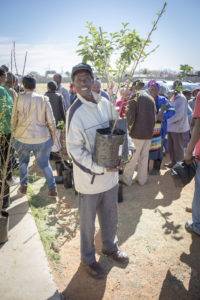
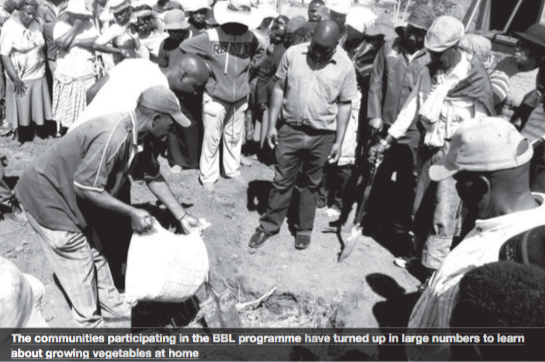
  • It is based on the western idea that: ‘If you give someone a fish you will feed them for a day; teaching someone to fish will feed them for their lifetime.’ In Africa, the Swahili people have a similar proverb: ‘Wealth, if you use it, comes to an end; learning, if you use it, increases.’ Even the Central African Bateke proverb might apply: ‘You learn how to cut down trees by cutting them down.’Ergo’s BBL programme – which is a learning initiative and not a ‘hand-out’ – was enthusiastically received when it began in August. Training was offered on a two-weekly basis, in smaller groups and sometimes at the home of a participant. The sessions covered simple theory on how to dig a trench bed, prepare the soil, germinate seeds and conserve water. The facilitators then did practical demonstrations to reinforce the learning. Although only 12 weeks have passed at the time of writing, early signs of success can be seen. Along Tsakane’s sand roads you will find homes built from zinc and scrap material.

[/fusion_text]

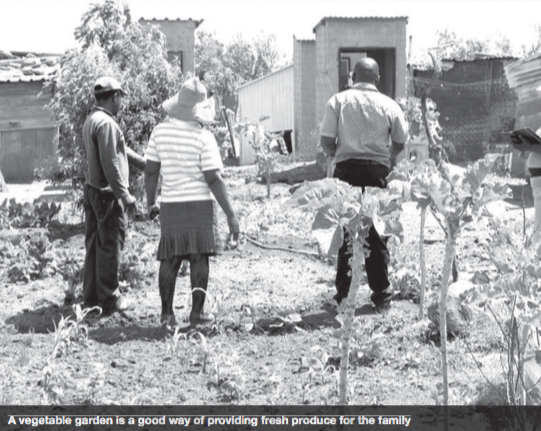
Occasionally you may see a brick home. The streets are full of noisy children, chatty women and curious dogs. Although at first glance this appears to be normal, if you look more closely you will see that there is something different happening here. Many of these homes have a vegetable garden, and these gardens contain a variety of vegetables, at various stages of growth. In fact, the women are trading vegetables. The children are doing chores and chasing birds from their gardens and pulling out the weeds. The dogs are inspecting the hand-dug rainwater harvesting trench.

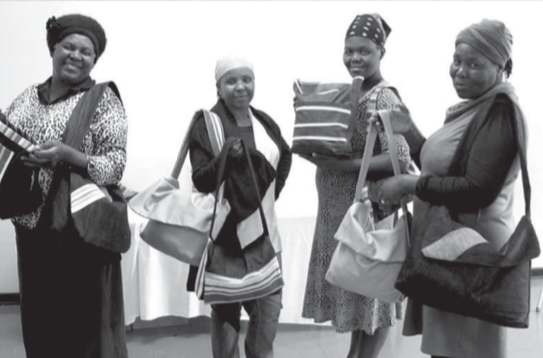
Showing Bags creating jobsErgo has brought hope to the people along these dry, dusty roads. The residents have been given a chance to take charge of their future. It may not look like much to the passer-by, but to those who linger, or who truly observe, there are clear signs that the company’s BBL project is the first step for many towards a better future.
 

SEWING IN SOWETO

“I sew, I sew, it’s off to work I go!”

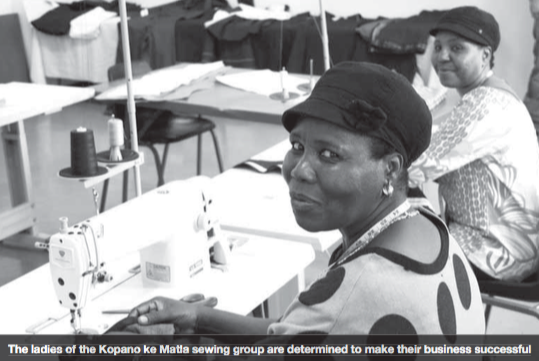
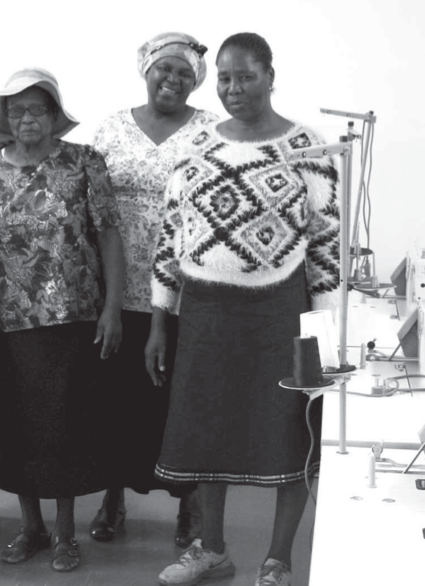
This is the song on the lips of five special women from Soweto. A number of years ago, these women had an idea – to start a sewing business. They registered themselves under the name Kopano ke Matla (Unity is Power). They then leased workspace from the multi-purpose centre in Meadowlands, and Ergo donated sewing machines to them. Over the years they had some work orders, but the business was difficult to sustain, and they faced a number of challenges. But this group of women were not going to give up easily. They kept their belief in the potential of their business idea alive because they had a clear vision of the life they wanted for themselves and their families.

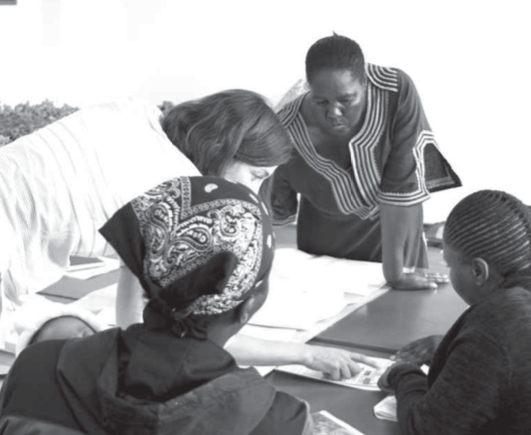
Ergo recently requested Umsizi to conduct a feasibility assessment of the Kopano ke Matla sewing business and it was found to have potential. In August, the group made a fresh beginning on their journey to make their dream a reality. The group is learning pattern development, item costing, purchase planning and the principles of marketing and sales. Kopano ke Matla has received a purchase order for 600 carry bags and pencil cases and it has big plans for 2016. The women are looking at developing new product lines, new market opportunities and building a steady cash flow.

Screen Shot 2016-02-14 at 10.29.25 AM

Wayne Swanepoel, Senior Manager: Human and Social Capital: “We are pleased to be working together with this group – the ladies have amazing talent, passion and determination.” Group member, Mrs Papi (aged 82) said: “We are happy to have made these bags for the Christmas gift programme and pleased that they will be given to those youngsters going to primary school. But we havemuchtodoandlearnin2016.”

planning for better community


]]>
BRPM – Restoring Hope for the Future https://www.umsizi.co.za/brpm-restoring-hope/ Mon, 17 Mar 2014 13:05:05 +0000 http://localhost:8888/wordpress/?p=870 Michael Putu’s Story

By Sicelo Khumalo

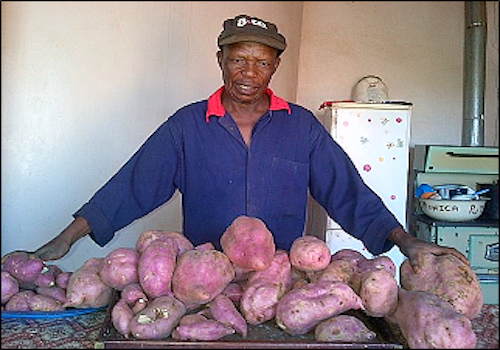
031714_1311_BAFOKENGRAS1A beneficiary of BRPM food security project, Michael Putu, 54, is residing at one of Macherora communities called Chaneng. His household consists of seven members and those who are economic active are unemployed- expect his wife who works as a cleaner in one of the Sun City shops. Putu was self employed and transported commuters from Macherora communities to Sun City. Unfortunately, he was forced to leave the taxi business by challenges beyond his control. To continue putting food on the table, Putu decided to start practising vegetable production and rear indigenous chickens for family consumption.

Initially Putu battled to grow crops, due to his lack of farming knowledge and other challenges such as; infertile soils, pest and diseases and the produce not looking fresh and healthy. For this reason, he could not even sell the produce to generate income for his family. Fortunately, heard about the BRPM project, and jumped at the opportunity to be training in intensive vegetable production. He also received agricultural infrastructure which entailed a greenhouse tunnel and two underground water harvesting tanks.

With the training and infrastructure, Putu is now able to produce fresh and healthy vegetables for his family and is also selling excess to local shops, passers-by and neighbours. To date, he has sold produce worth a R1000. It is important to note that through the household agricultural project Putu has also developed marketing skills as he is able to decide what variety of vegetable is in demand and who to sell to. He is also diversifying his produce and expanding his garden. “I don’t buy vegetables any more and through the money I get from selling produce, I am able to buy groceries and seeds for my garden,” said Putu gratefully.

Undoubtedly, BRPM has improved the livelihoods of Macherora beneficiaries and Putu bears testimony to that. It is wonderful that the project has also incubated business opportunities and some of the beneficiaries, like Putu, have already tapped into such prospects. Indeed Putu has taken full advantage of the project and is using it to his full potential. “I’m very grateful to BRPM and hope other Macherora community members get as great an opportunity as me,” said Putu.

]]>